- Home
- Products
- Certificates
- Cooperation
- About Us
- News
- Contact
Contact





+86 188 3213 4509
Contact
+86 188 3213 4509

Industry News
Industry news
Apr. 08, 2026
Solar cables are a key component in photovoltaic (PV) power systems, responsible for safe and efficient transmission of DC electricity generated by solar panels. Unlike conventional electrical cables, solar cables are designed to withstand long-term outdoor exposure, including ultraviolet radiation, temperature fluctuations, moisture, and mechanical stress.
As solar installations continue to expand across residential, commercial, and utility-scale projects, selecting the right cable construction and specifications is essential for ensuring system reliability and long service life.
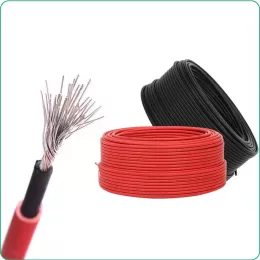
A solar cable (PV cable) is a specially engineered single-core electrical cable used to interconnect solar panels and system components such as inverters, combiner boxes, and energy storage units.
These cables are designed for:
Continuous outdoor operation
High UV and weather resistance
Stable performance under wide temperature ranges
Long service life exceeding 25 years in PV environments
Solar cables are widely used in rooftop systems, solar farms, and off-grid installations where reliability and durability are critical.
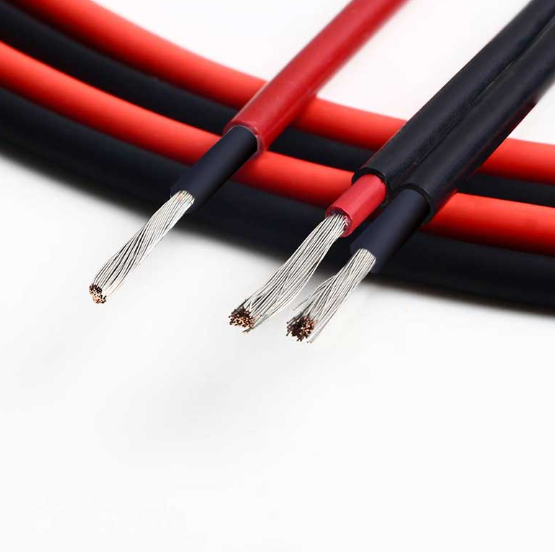
The structure of a solar cable is carefully designed to ensure electrical safety, mechanical strength, and environmental resistance. A typical photovoltaic cable consists of three main components:
The conductor is the core element responsible for transmitting electrical current.
Material: High-purity stranded copper
Common type: Tinned copper for corrosion resistance
Structure: Fine multi-strand construction (Class 5 flexibility)
Key characteristics:
Excellent electrical conductivity
Reduced power loss over long distances
High flexibility for installation in tight routing conditions
Tinned copper conductors are commonly used in solar applications due to their improved resistance to oxidation and environmental corrosion.
The insulation layer surrounds the conductor and provides electrical separation and safety protection.
Materials: Cross-linked polyethylene (XLPE) or cross-linked polyolefin (XLPO)
Function: Electrical insulation and thermal stability
Performance features:
High dielectric strength
Resistance to UV radiation and ozone exposure
Stable operation under extreme temperature conditions
Enhanced mechanical durability
XLPO insulation is widely used in modern PV cables due to its improved flame retardant and weather-resistant properties.
The outer sheath provides the final protective barrier against environmental and mechanical damage.
Material: Halogen-free XLPO or cross-linked polymer compounds
Function: Mechanical protection and environmental resistance
Key features:
UV and sunlight resistance
Ozone and moisture resistance
Abrasion and impact protection
Flame retardant and low smoke emission
The sheath ensures long-term durability even in harsh outdoor installations.
Solar cables are designed according to strict electrical and environmental standards to ensure safe operation in PV systems.
Typical voltage ratings include:
600/1000 V DC (standard residential and commercial systems)
1500 V DC (utility-scale solar farms)
Higher voltage ratings allow more efficient long-distance power transmission with reduced losses.
Solar cables must operate reliably under extreme temperature conditions:
Operating range: -40°C to +90°C or +120°C
Short-circuit temperature: up to 250°C (short duration)
This ensures stable performance in both hot desert environments and cold climates.
Common cross-sectional areas include:
1.5 mm²
2.5 mm²
4 mm²
6 mm²
10 mm² and above for large-scale systems
Cable sizing depends on system current, voltage drop requirements, and installation distance.
Solar cables are engineered to meet demanding performance requirements:
Low electrical resistance for reduced energy loss
High current carrying capacity
Excellent flexibility for installation
Resistance to bending stress and vibration
Long-term stability under continuous load
Proper selection helps improve system efficiency and reduce maintenance costs.
| Material | Key Advantage | Application Focus |
|---|---|---|
| XLPE | High thermal stability and mechanical strength | Industrial and standard PV systems |
| XLPO | Superior UV resistance, flexibility, and flame retardancy | High-end and harsh environment installations |
Both materials are widely used, but XLPO is increasingly preferred for demanding outdoor PV environments due to its enhanced durability.
High-quality solar cables are manufactured in compliance with international standards such as:
IEC 62930
EN 50618
TÜV certification requirements
UL 4703
These standards cover electrical performance, insulation integrity, flame resistance, UV aging, and mechanical durability testing.
Solar cables are essential in various PV system applications:
Residential rooftop solar systems
Commercial and industrial PV installations
Utility-scale solar farms
Floating and off-grid solar systems
Energy storage system connections
Their durability ensures stable operation across different installation environments.
The construction and specifications of solar cables directly affect the safety, efficiency, and lifespan of photovoltaic systems. With a structure consisting of high-quality copper conductors, advanced XLPE or XLPO insulation, and weather-resistant outer sheaths, solar cables are engineered for long-term outdoor performance.
Selecting cables that comply with international standards ensures reliable energy transmission and supports the stable operation of modern solar power systems.