- Home
- Products
- Certificates
- Cooperation
- About Us
- News
- Contact
Contact






+86 188 3213 4509
Contact
+86 188 3213 4509

Industry News
Industry news
Dec. 22, 2025
In many electrical installations, armored cables are used to protect conductors from mechanical damage, environmental stress, and ensure long-term reliability. Two common types of armored cables are STA (Steel Tape Armoured) and SWA (Steel Wire Armoured). Though both serve a similar purpose — protecting and securing power cables — they differ in structure, performance, and suitable usage scenarios.
STA stands for Steel Tape Armoured cable.
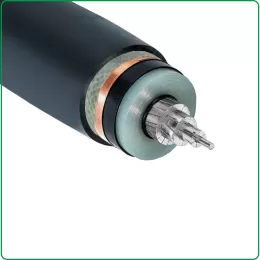
Construction: STA cables typically have copper conductors insulated with XLPE or PVC, an inner sheath, then two layers of steel tape armor wrapped around, followed by an outer sheath.
Voltage & use case: STA cables are generally used for low- to medium-voltage applications.
Strength: Their steel-tape armor gives them excellent resistance to external pressure and compression, making them suitable for buried installations, tunnels, or areas exposed to heavy loads.
Typical strengths of STA cables:
Good resistance to compression and crushing forces.
Cost-effective due to simpler steel tape construction.
Suitable for buried installations, fixed underground cables, ducts, tunnels, or embedded wiring.
Limitations:
Less flexible due to steel tape armor.
Lower tensile strength, not ideal for long pulls or high-tension installations.
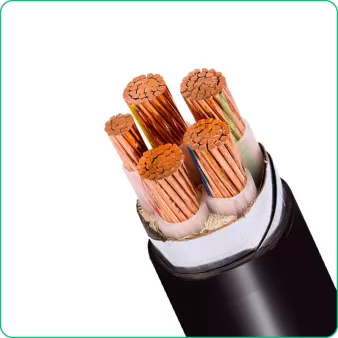
SWA stands for Steel Wire Armoured cable.
Construction: SWA cables use steel wires helically wound around the insulation/core, then covered by an outer sheath.
Use case: Designed for mains power supply, underground systems, power networks, cable ducts, industrial installations, and scenarios requiring strong mechanical protection.
Strength: Provides high resistance to tensile stress and mechanical impact, making them suitable for installations where cables may experience pulling or bending.
Typical strengths of SWA cables:
High tensile strength for long runs, vertical drops, or industrial applications.
Greater flexibility than tape-armored equivalents.
Robust against mechanical damage, impact, and stress.
Limitations:
Heavier and more expensive than STA cables.
Less effective against uniform compressive pressure compared to tape-armored cables.
| Feature | STA Cable (Steel Tape Armoured) | SWA Cable (Steel Wire Armoured) |
|---|---|---|
| Armour Type | Steel tape (wrapped layers) | Steel wires (helically wound) |
| Best Protection Against | Compression, crushing, radial pressure | Tension, pulling, mechanical stress, impact |
| Flexibility | Lower | Higher |
| Tensile Strength | Lower | High |
| Use Cases | Direct burial, pipelines, underground ducts, embedded building wiring | Underground wiring, overhead, cable trays, vertical/horizontal runs, industrial installations |
| Cost & Weight | Lighter, cheaper | Heavier, more expensive |
| Manufacturing Complexity | Simpler | More complex |
Use STA cable when the project involves direct burial, underground tunnels, fixed ducts, pipelines, or situations where cables are under external pressure rather than longitudinal stress. STA is economical and sufficient for stable installations.
Use SWA cable when the installation requires pulling, long runs, vertical/horizontal mobility, robust mechanical protection, or flexibility — such as in industrial settings, cable trays, power plants, or outdoor installations.
Consider budget and weight constraints: STA is lighter and cheaper, SWA provides better durability and mechanical resilience.
Both STA and SWA cables provide mechanical protection and reliability compared to unarmoured cables:
STA (steel tape armored) excels under compression and radial pressure, ideal for buried or fixed installations.
SWA (steel wire armored) performs better under tension, mechanical stress, and dynamic installations, offering flexibility and tensile strength.
The choice depends on the installation environment, mechanical stresses, flexibility requirements, cost, and durability needs.