- Home
- Products
- Certificates
- Cooperation
- About Us
- News
- Contact
Contact





+86 188 3213 4509
Contact
+86 188 3213 4509

Industry News
Industry news
Jan. 12, 2026
Designing overhead power lines for utility-scale green energy projects, such as solar farms and wind farms, requires careful planning, technical expertise, and high-quality materials to ensure efficiency, safety, and long-term reliability. Zhuhai Electric Wire and Cable Co., Ltd., a leading manufacturer of overhead and power cables, provides comprehensive solutions to support such projects.
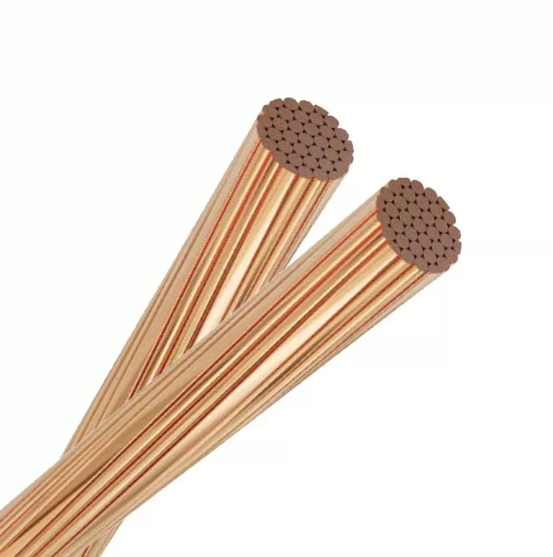
The first step in designing overhead power lines is to assess the project’s energy output, voltage levels, and geographic conditions. Utility-scale renewable projects often require medium- to high-voltage transmission, where the choice of conductor type, insulation, and cable configuration is critical. For instance, bare stranded conductors are commonly used for long-distance transmission, while aerial bundled cables (ABC) are suitable for urban or environmentally sensitive areas due to their safety and reduced visual impact.
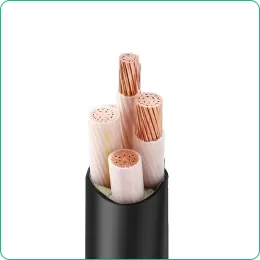
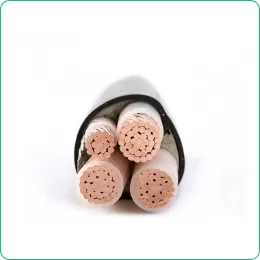
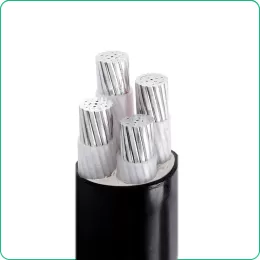
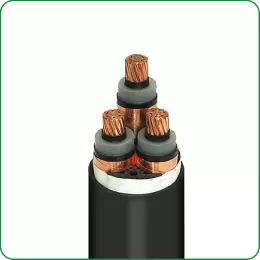
Zhuhai Cable offers a wide range of cables suitable for green energy applications:
Bare Stranded Conductors for conventional overhead lines, ensuring high conductivity and mechanical strength.
Aerial Bundled Cables (ABC) to minimize outages and prevent short circuits caused by fallen branches or wildlife.
Overhead Service Drop Cables to connect renewable energy installations to local distribution networks safely.
For utility-scale solar and wind projects, insulated and fire-resistant cables are often recommended to maintain reliability under harsh environmental conditions.
Proper spacing of conductors, tower height, and line routing are essential to minimize energy losses and ensure safety. Engineers must consider factors like wind load, ice accumulation, and temperature variations, which can affect sag and tension in overhead lines. Using high-quality materials, such as XLPE-insulated and fire-resistant cables from Zhuhai Cable, helps maintain stable performance even in extreme conditions.
Overhead line design must comply with international and local standards, including voltage ratings, insulation requirements, and environmental regulations. Zhuhai Cable products meet certifications like ISO 9001, CE, and CCC, ensuring that cables are safe, reliable, and compliant for global deployment.
Every renewable energy project has unique requirements. Zhuhai Cable provides customized solutions, from conductor type and insulation material to specific voltage ratings and cable lengths. This flexibility ensures that designers can scale projects efficiently while meeting technical and safety standards.
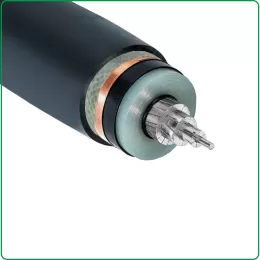
Selecting durable, corrosion-resistant cables reduces maintenance costs and downtime. Armoured and shielded cables, including STA and SWA types, provide extra protection against mechanical damage and environmental stress, extending the service life of overhead power lines in utility-scale green energy projects.
Designing overhead power lines for utility-scale green energy is a complex task that balances efficiency, safety, and cost. By using high-quality, certified cables and components from trusted manufacturers like Zhuhai Electric Wire and Cable Co., Ltd., engineers can ensure long-term performance, reliable energy delivery, and compliance with global standards. Proper planning, material selection, and design customization are the keys to building sustainable and resilient renewable energy infrastructure.