- Home
- Products
- Certificates
- Cooperation
- About Us
- News
- Contact
Contact






+86 188 3213 4509
Contact
+86 188 3213 4509

Industry News
Industry news
May. 18, 2026
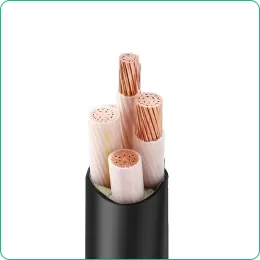
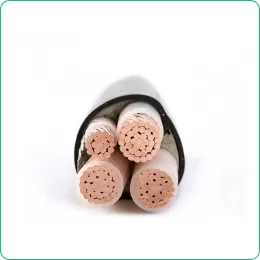
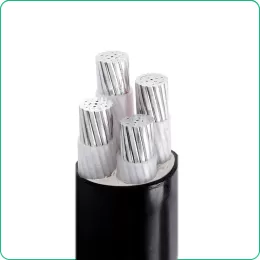
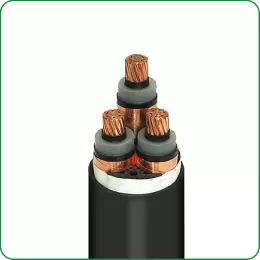
Choosing between copper and aluminium power cables is one of the most important decisions in electrical design. Both materials are widely used in residential, commercial, and industrial power systems, but they differ significantly in terms of conductivity, cost, weight, durability, and installation requirements. Understanding these differences helps engineers and buyers select the most suitable option for safety, efficiency, and long-term performance.
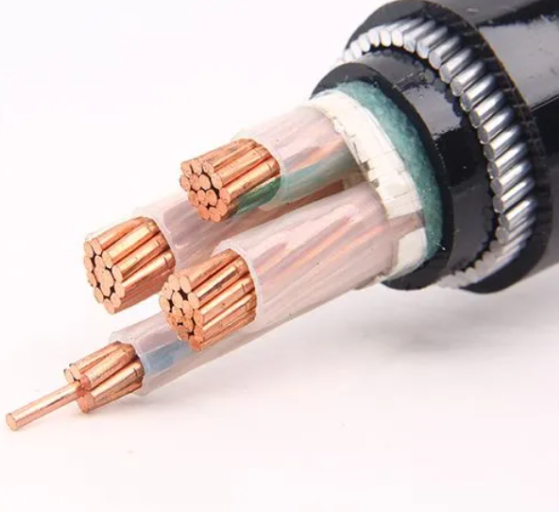
Copper is a superior electrical conductor compared to aluminium. It has much lower electrical resistivity, meaning less energy is lost as heat during transmission.
Copper conductivity: ~100% IACS (International Annealed Copper Standard)
Aluminium conductivity: ~61% of copper
This means aluminium must be about 1.5–1.6 times larger in cross-section to carry the same current as copper.
As a result:
Copper cables deliver higher efficiency in smaller sizes
Aluminium cables require thicker conductors for the same load
Copper generally produces lower voltage drop and power loss
One of aluminium’s biggest advantages is its low density.
Aluminium is about 70% lighter than copper
Copper is much heavier but more compact in design
This leads to different use cases:
Aluminium is easier for long-distance overhead lines and large-scale installations
Copper is preferred in tight spaces, buildings, and equipment wiring
The weight difference also reduces structural load, making aluminium attractive for utility-scale projects.
Cost is often the deciding factor in large installations.
Aluminium is significantly cheaper per kilogram than copper
Copper provides higher performance but at a higher material cost
Although aluminium is cheaper upfront, it may require:
Larger cable sizes
More installation space
More careful termination practices
So aluminium wins on initial cost, while copper often wins on lifetime performance and reliability.
Copper is mechanically stronger and more stable.
Key differences:
Copper has higher tensile strength and flexibility
Aluminium is more prone to fatigue and deformation under repeated bending
Aluminium is more affected by thermal expansion and contraction
In addition:
Aluminium oxide increases resistance at connection points if not properly treated
Copper is more stable and forms more reliable long-term electrical connections
This makes copper more suitable for:
High-reliability systems
Critical infrastructure
Indoor electrical distribution
Copper is generally easier and safer to install in complex environments.
Copper cables are more flexible and easier to bend
Aluminium requires larger bending radius and careful termination
Aluminium connections need anti-oxidation measures and proper torqueing
Improper aluminium termination can lead to overheating and failures over time.
Copper power cables are commonly used in:
Residential wiring
Industrial control systems
High-reliability power distribution
Electronics and compact systems
Aluminium power cables are commonly used in:
Overhead transmission lines
Utility feeders
Large-scale industrial power distribution
Cost-sensitive infrastructure projects
Copper and aluminium power cables each have clear advantages:
Copper = Best performance, reliability, and compact size
Aluminium = Lower cost, lighter weight, and large-scale efficiency
In practice, copper is preferred where safety, durability, and efficiency are critical, while aluminium dominates in large power transmission systems where cost and weight savings are more important.